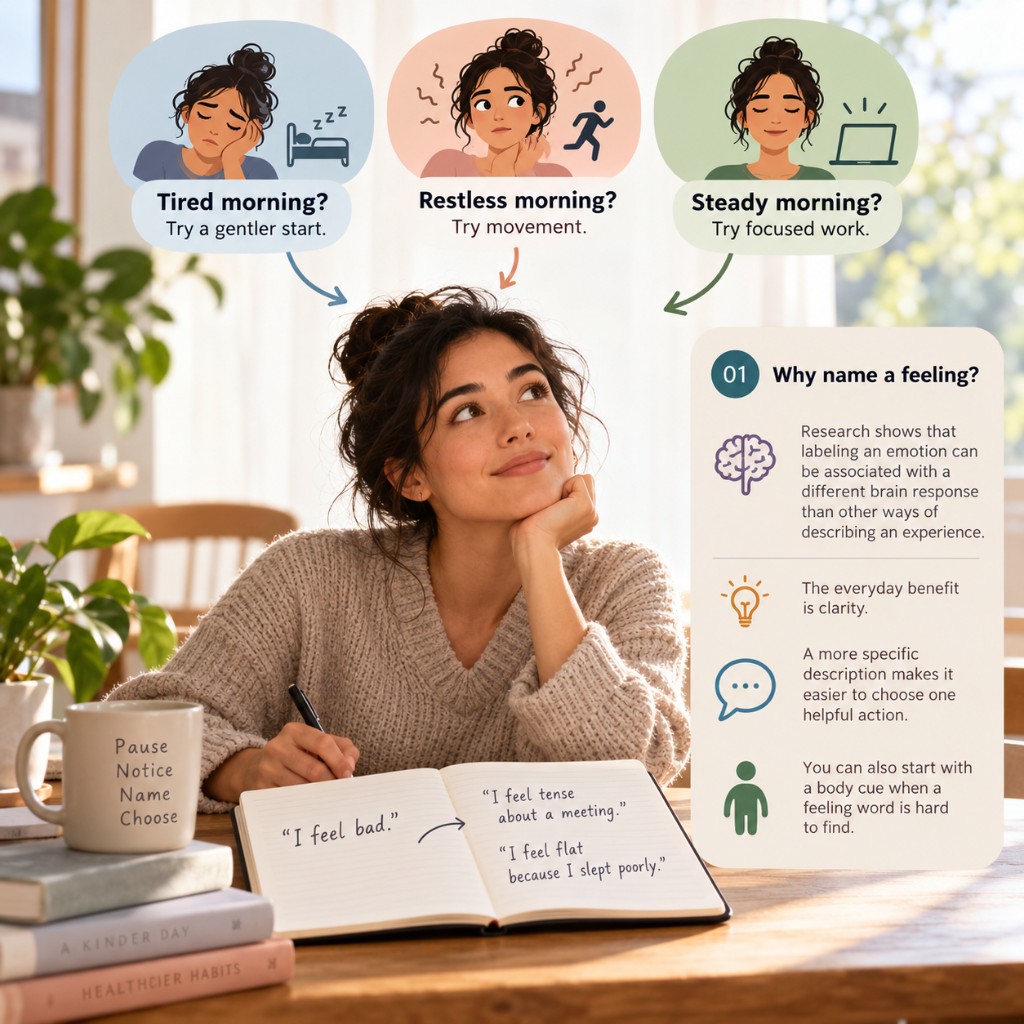

Stress often shows up in the body before it becomes a neat sentence: a tight jaw, shallow breathing, restless hands, or a sudden urge to keep moving. A short reset can help you notice those signals and create a pause before your next decision.
Breathing and body scans are options, not tests of willpower. You do not need to breathe perfectly, empty your mind, or force your muscles to relax. A useful practice leaves you with a little more choice, even if the stressful situation remains.
What the evidence does, and does not, say
Research on mindfulness and breathing suggests that some people experience improvements in stress or mood, but results vary by method and study quality. A small randomized trial of daily structured breathing found improvements in positive mood over one month; it cannot tell us that a single exercise will work for everyone or replace treatment.
A body scan is a way to notice sensations from head to toe without immediately changing them. Some people find inward attention uncomfortable, particularly during intense anxiety or after trauma. In that case, keep your eyes open and orient to the room, or skip the scan entirely.
A five-minute reset you can adapt
Choose a seated, standing, or lying position that feels stable. Stop or return to normal breathing if you feel dizzy or uncomfortable.
- 1Look around and name three neutral things you can see. Notice where your body is supported.
- 2For a minute or two, let the inhale arrive naturally and make the exhale slightly slower and easier. Avoid breath holds or large forced breaths.
- 3Move attention through your forehead, jaw, shoulders, hands, chest, belly, and feet. At each place, ask “What do I notice?” rather than “How do I fix this?”
- 4Choose a next action small enough to do now: water, a brief walk, one message, or a return to the task with a clearer boundary.
Where Gruvium fits
Calm Center offers guided breathing, grounding, and body-scan experiences when you would rather follow a gentle cue than remember the steps. Try a short session first and notice how you feel afterward. If sound is distracting, choose a quieter experience.
The tool should support your judgment. When stress is caused by workload, unsafe conditions, or a relationship problem, a breathing exercise cannot solve the source. You may also need rest, a conversation, practical support, or professional care. If symptoms are severe, persistent, or interfering with daily life, talk with a qualified health professional.
Notice what happens after the practice
When the five minutes end, ask whether anything shifted: breathing, muscle tension, attention, or your willingness to take the next step. “Nothing changed” is a valid answer. It may mean you need a different tool or a change in the situation itself.
If you have time, try a brief Mood check-in before and after a practice. Compare your own experience over several sessions rather than expecting every session to produce the same result. This keeps the exercise in its proper role: a gentle support you can choose, not a promise of instant regulation.
Questions
Do I need to hold my breath?
No. Comfortable, unforced breathing is enough. Skip holds if they feel unpleasant or you have a health reason to avoid them.
What if a body scan makes me more anxious?
Open your eyes, focus on external sights and sounds, or stop. Grounding through the room or gentle movement may suit you better.
Sources and further reading
These primary sources inform the general guidance above. The suggested Gruvium practices are optional ways to apply it.
- ↗NCCIH: Meditation and Mindfulness — Effectiveness and Safety
- ↗Balban et al.: Brief structured respiration practices (Cell Reports Medicine)
- ↗NIMH: Caring for Your Mental Health
This article is for education and everyday wellbeing. It is not medical advice or a substitute for care from a qualified professional.
By Gruvium Editorial